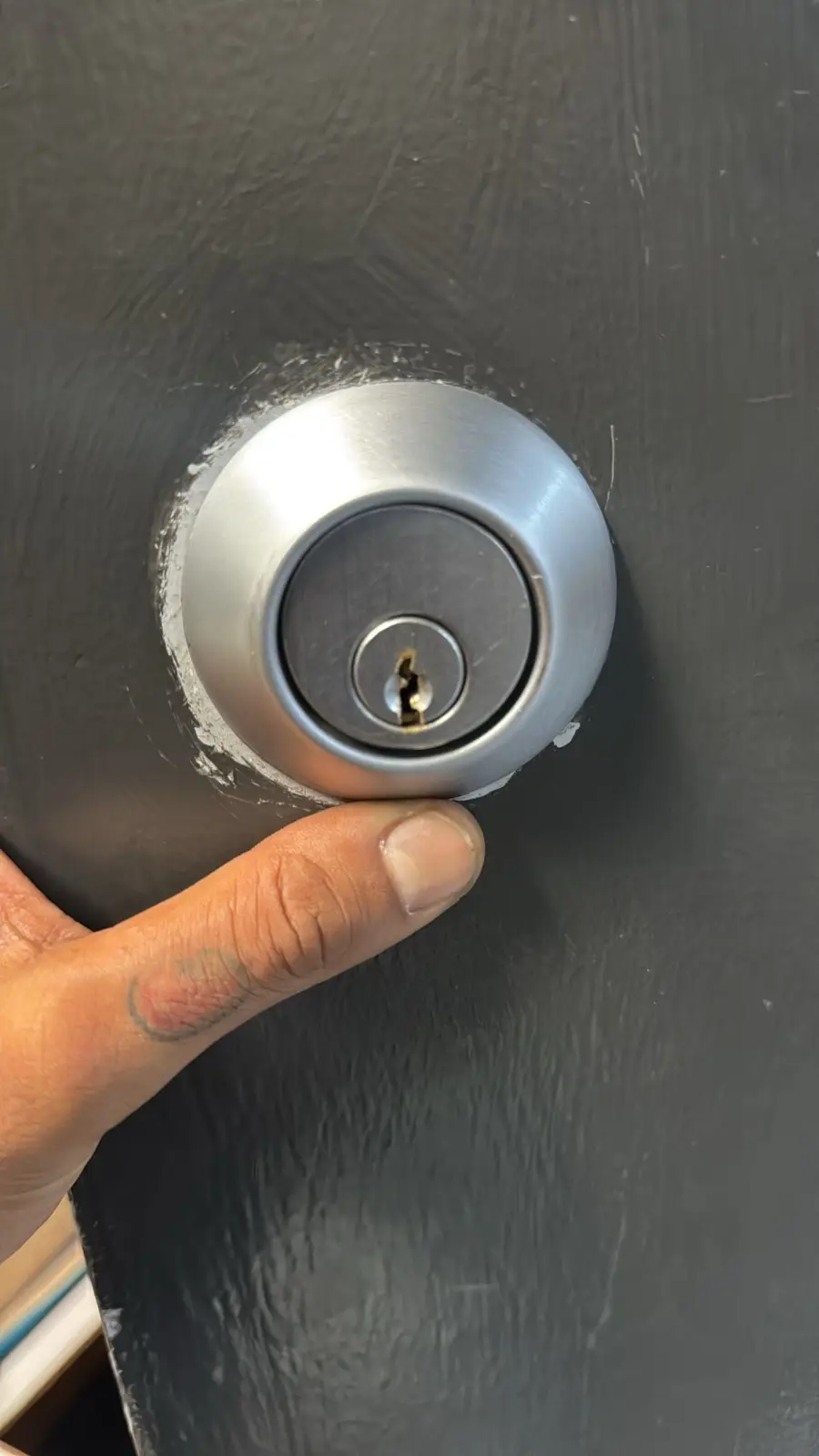
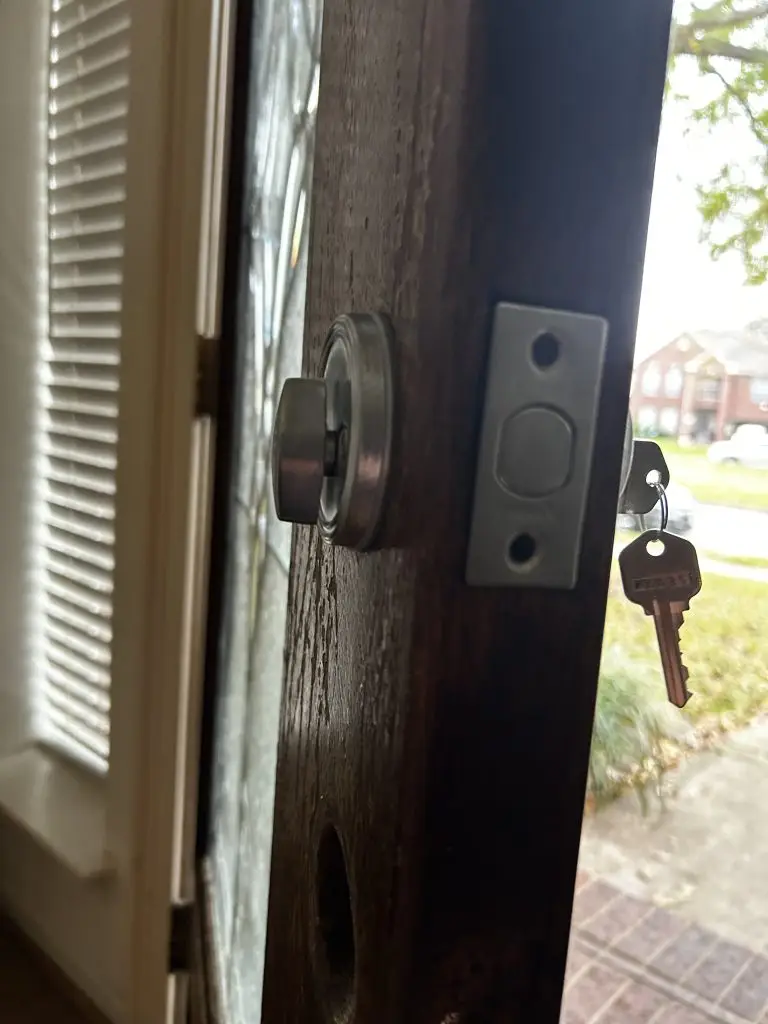
If your front door deadbolt turns easily when the door is open but sticks when it is closed, the bolt likely is not lining up with the hole in the frame. Don’t keep forcing the key or thumbturn. Check the door fit, hinges, weatherstripping, and strike area first. If lifting, pushing, or jiggling is needed, residential lock repair can prevent a lockout or damaged lock.
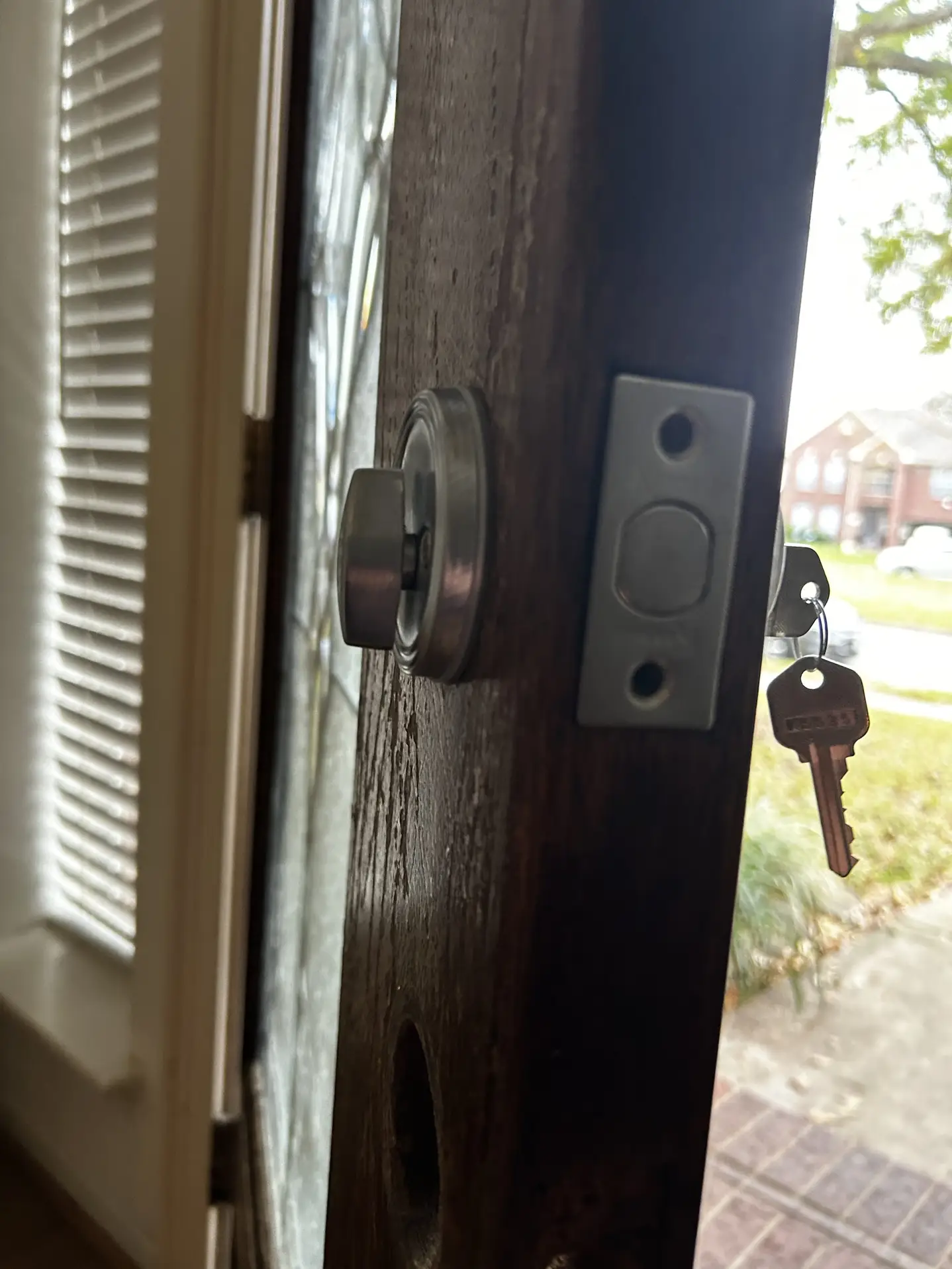
Start with the open-door and closed-door test
Stand inside where you can work the thumbturn. With the door open, extend and retract the deadbolt several times. Then close the door and repeat the same test.
Kwikset’s door-alignment check uses this same comparison. A bolt that moves smoothly with the door open but catches when closed points toward a fit problem between the bolt and the frame. A bolt that is hard to turn in both positions may have trouble inside the lock or key cylinder.
- Smooth when open, hard when closed often points to the strike plate, bolt pocket, hinges, or door position.
- Hard in both positions can point to a worn, dirty, loose, or damaged lock part.
- Hard only with a key may involve the key or the key cylinder. Avoid twisting the key harder.
- Hard only with the thumbturn may involve the inside lock parts or bolt movement.
This test does not identify every cause, but it helps you avoid changing a working lock when the door or frame is the real problem.
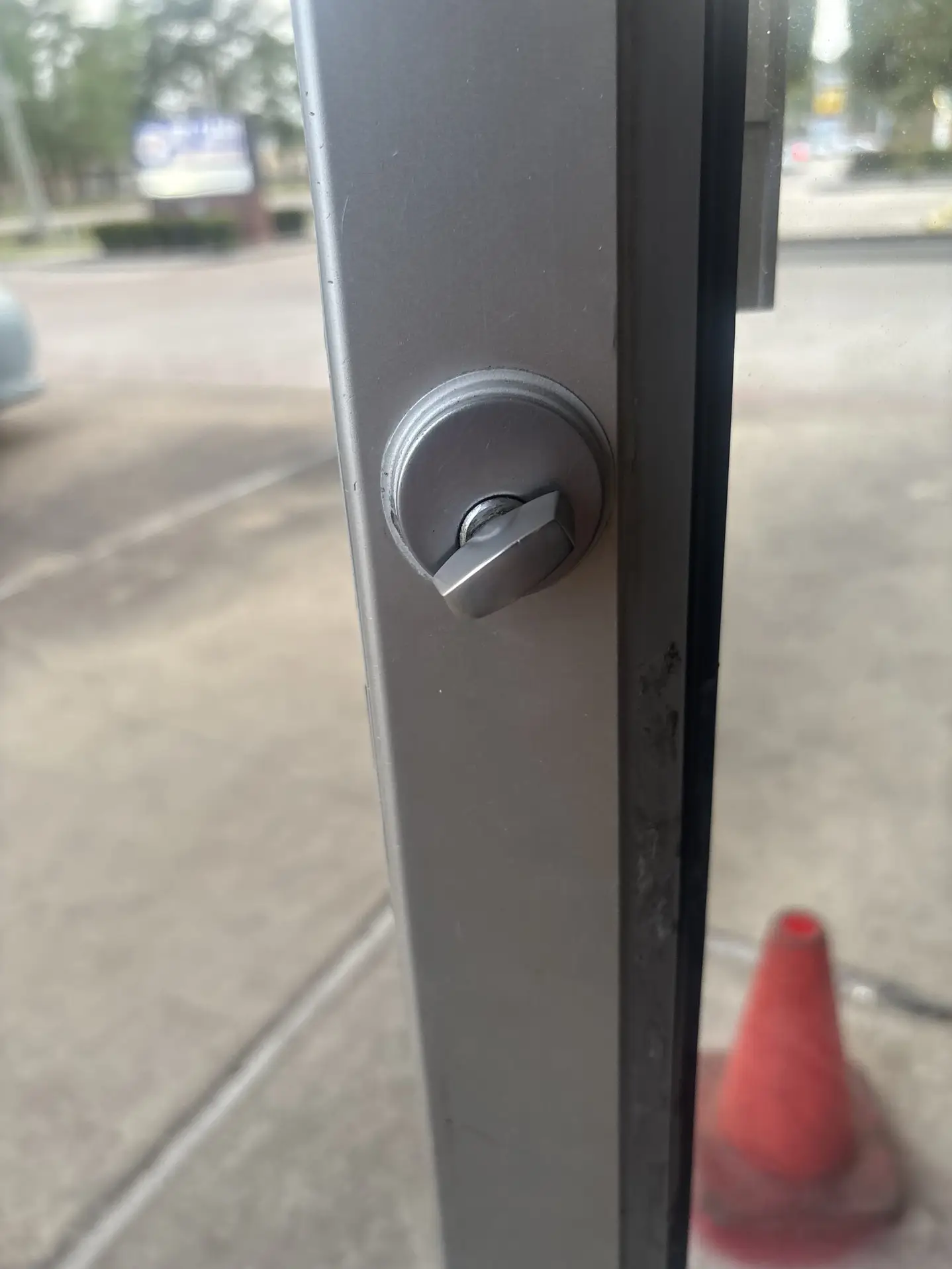
Look for signs that the deadbolt is missing the strike
The strike plate is the metal plate on the door frame. Behind it is the bolt pocket, which is the hole that receives the deadbolt. The bolt needs room to enter fully. If it hits the top, bottom, or edge of that opening, the thumbturn can feel tight or stop short.
Check for fresh scrape marks on the deadbolt, strike plate, or edge of the bolt opening. You may also notice that the deadbolt works only when you pull the door toward you, push it farther into the frame, or lift the handle side of the door.
Schlage notes that pushing, pulling, or lifting a door to close it can point to a strike adjustment need or sagging hinges. It also notes that the deadbolt pocket needs enough depth for the bolt to extend all the way.
Use these clues without forcing the bolt
- The bolt rubs the top of the strike opening. The door may have settled lower than it was when the strike was installed.
- The bolt rubs the bottom. The door may be sitting high, or the frame may be moving.
- The bolt hits the side. The door may not be closing squarely against the frame.
- The bolt goes partway in but will not lock. The pocket may not be deep enough or may be blocked by debris.
Don’t file, drill, or enlarge the frame opening before you know why the position changed. Removing material may hide a hinge or frame problem, and it can leave the door with a poor fit.
Check the parts that can change how the door sits
A front door is a group of parts that need to stay lined up. A deadbolt can start sticking even when the lock itself has not changed.
Loose or sagging hinges
Open the door and look at each hinge. Loose screws, gaps around a hinge, or a door that looks lower on the latch side can change where the bolt meets the strike. If the door needs to be lifted before the deadbolt will turn, stop making it part of your daily routine. That extra movement puts strain on the bolt and key.
Weatherstripping that presses too hard
Weatherstripping keeps out drafts and moisture, but it can also make a door harder to close if it is bunched, shifted, or too tight. Kwikset lists weatherstripping as a possible source of locking resistance. Look for a section that is folded over, loose, or compressed much more than the rest.
Do not cut away good weatherstripping just to make the lock turn. First check whether the door is aligned and closing evenly.
Changes in a wood door or frame
Houston heat and humidity can change the fit of an entry door, especially when wood is part of the door or frame. The USDA Forest Products Laboratory explains that wood takes in moisture vapor and swells, then shrinks as it dries. A finish can slow that exchange, but it cannot stop it completely.
A seasonal fit change may be temporary. Still, a deadbolt should not need force. If the sticking continues, gets worse, or appears with visible frame damage, have the door and lock checked.
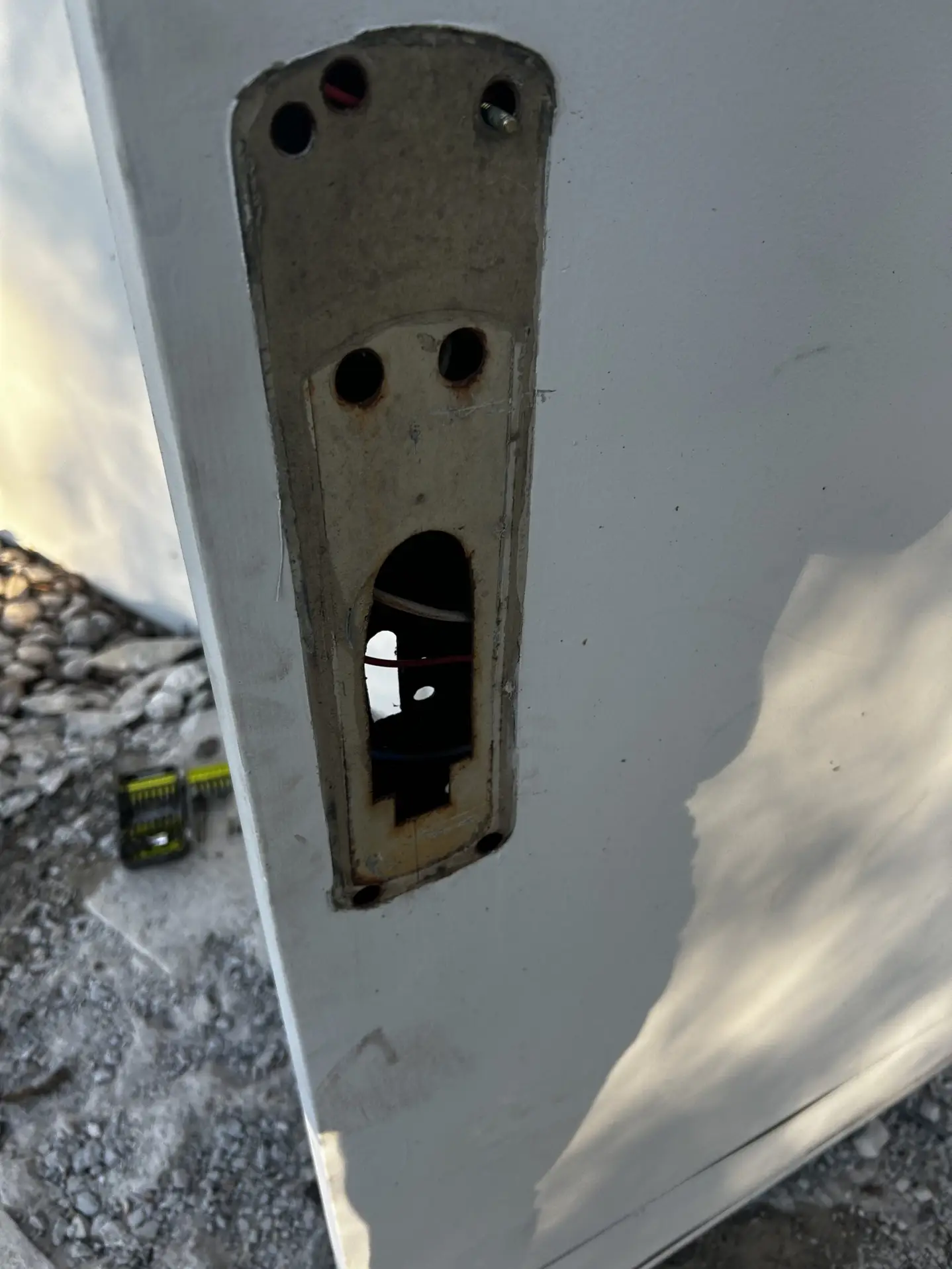
Know when the lock itself may need repair
The open-door test is useful here. If the bolt binds even while the door is open, look for a lock problem rather than a strike problem.
Stop using extra force and arrange an inspection if you notice any of these signs.
- The key is difficult to insert, remove, or turn.
- The thumbturn feels gritty, loose, or uneven.
- The bolt moves only partway even with the door open.
- The lock face, thumbturn, or strike plate is loose.
- The key bends, catches, or looks damaged after use.
- The deadbolt has started sticking after a break-in attempt or other visible damage.
Forcing a key can break it in the lock. Forcing the thumbturn can damage internal parts or leave the bolt stuck. Avoid oil, household grease, or improvised tools unless the lock maker’s instructions call for a specific product. The wrong product can collect dirt or fail to solve the real alignment issue.
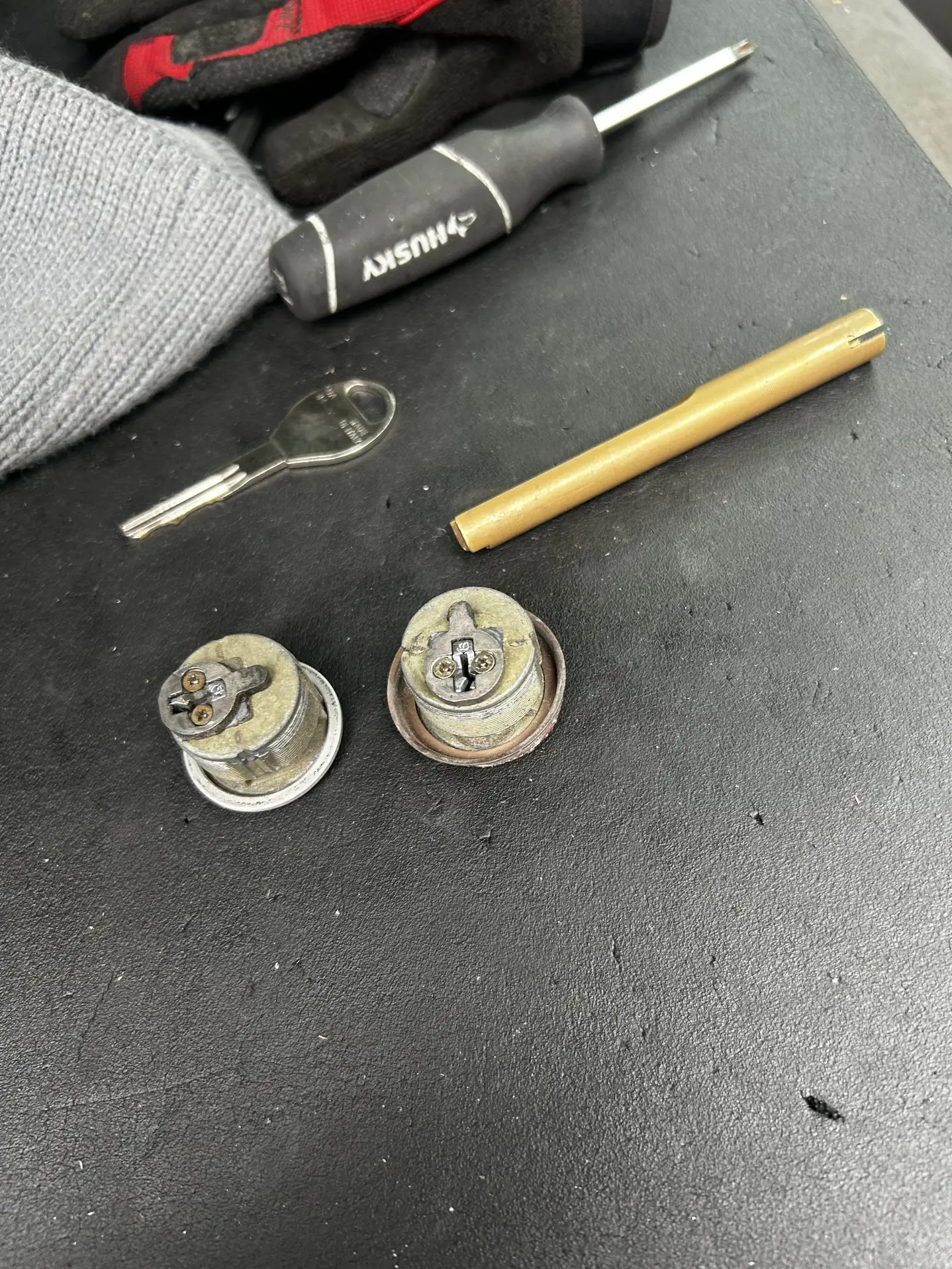
Decide whether you can wait or need help now
A door that still locks may give you time to schedule service, but don’t ignore a change in how it works. Use the pattern below to decide the next step.
| What you notice | Best next step |
|---|---|
| The bolt is smooth when open and rubs only when closed | Check for obvious loose hinges or shifted weatherstripping, then arrange an alignment check if the problem remains. |
| You must push, pull, lift, or jiggle the door to lock it | Stop forcing it and have the door, strike plate, and bolt position inspected. |
| The key or thumbturn binds with the door open | Have the deadbolt checked before a key breaks or the lock stops working. |
| The bolt will not fully extend | Do not leave the door partly locked. Seek prompt lock and strike service. |
| There is damage, smoke, fire, or a person trapped inside | For fire, smoke, or a trapped person, call 911 first. |
Prepare for a residential lock repair visit
A few details can help the technician focus on the right part of the door. You do not need to take the lock apart.
- Note whether the deadbolt is hard to lock with the door open, closed, or both.
- Notice whether pulling, pushing, or lifting the door changes the result.
- Keep the key that has been used most often available for inspection.
- Clear bags, mats, or furniture away from the inside and outside of the entry.
- If the issue began after painting, weatherstripping work, a new door, or visible damage, share that timing.
A technician can check the deadbolt, strike plate, door alignment, hinges, and bolt pocket together. That matters because replacing a lock alone may not fix a door that has shifted.
24 Hour Locksmith Service lists deadbolt repair and replacement, strike plate and door alignment, and smart lock repair on its Residential lock repair service page. The company provides mobile locksmith service in the greater Houston metropolitan area.
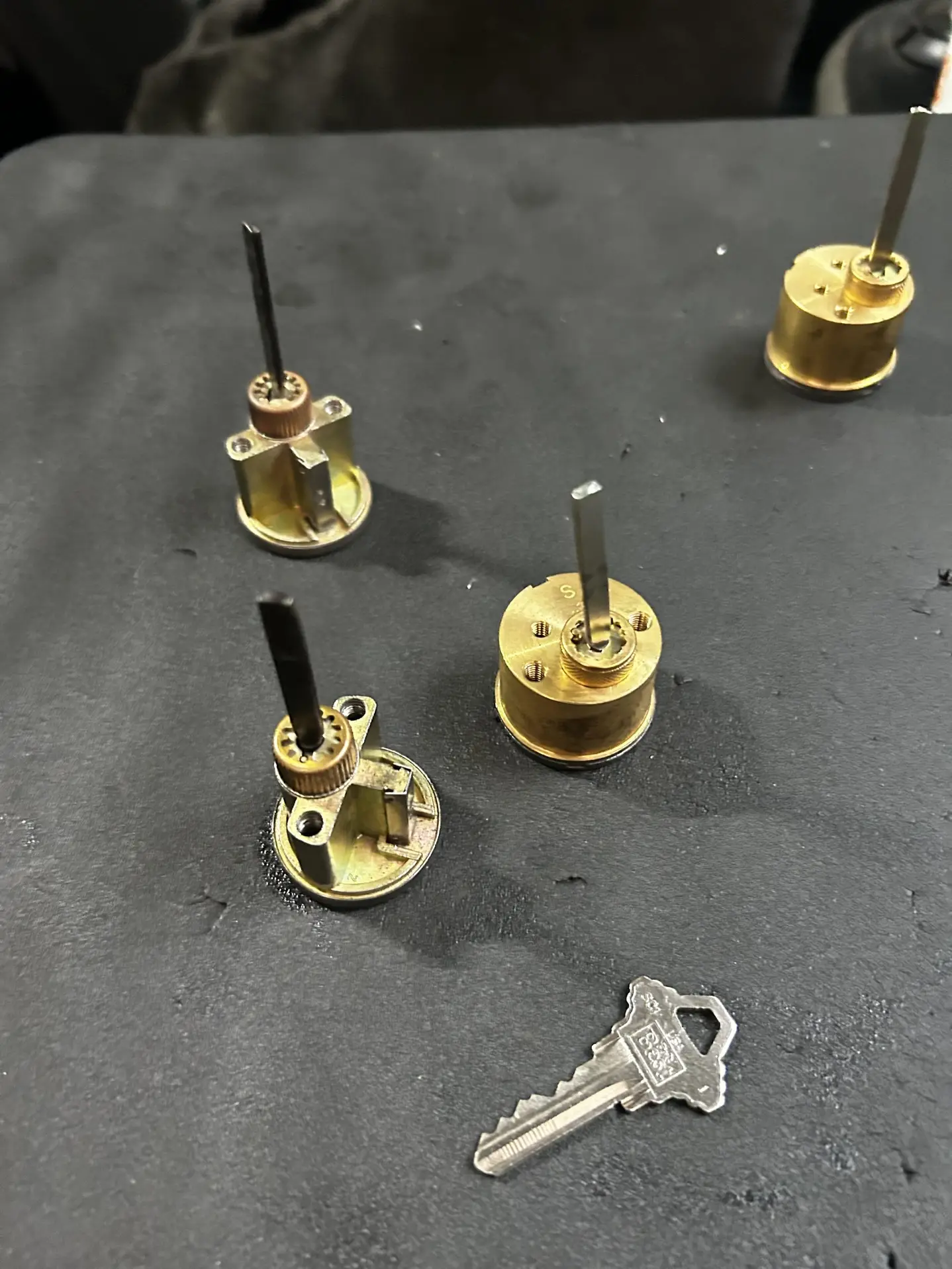
FAQs about a hard-to-lock front door deadbolt
Can I lock the deadbolt if it only catches sometimes?
A deadbolt should extend fully into its frame opening. If it catches, stops partway, or works only when the door is held in a certain spot, do not rely on it for security. Use another safe entrance if available and arrange service before the lock fails closed or open.
Why does my deadbolt stick more after rain or humid weather?
Moisture can change the size of wood parts and alter the gap between the door and frame. Weatherstripping can also hold the door under more pressure. The cause may be temporary, yet repeated sticking can wear the key and lock parts.
Should I replace the deadbolt or repair the alignment?
Replacement may be needed when the lock is damaged or worn. If it works freely with the door open, correcting the door and strike fit may be the relevant repair. An inspection can separate those two problems before parts are changed.
What if my front door has a smart deadbolt?
Check the physical bolt first. A smart deadbolt still needs the door and strike to line up. If the motor sounds strained, the bolt does not extend fully, or manual locking is difficult, avoid repeated attempts and have the door fit and lock checked.
If your front door deadbolt needs pushing, lifting, or force to lock, call 24 Hour Locksmith Service at (832) 979-7899 for residential lock repair in Houston. A mobile locksmith can inspect the deadbolt, strike plate, and door alignment and help you choose the next step.