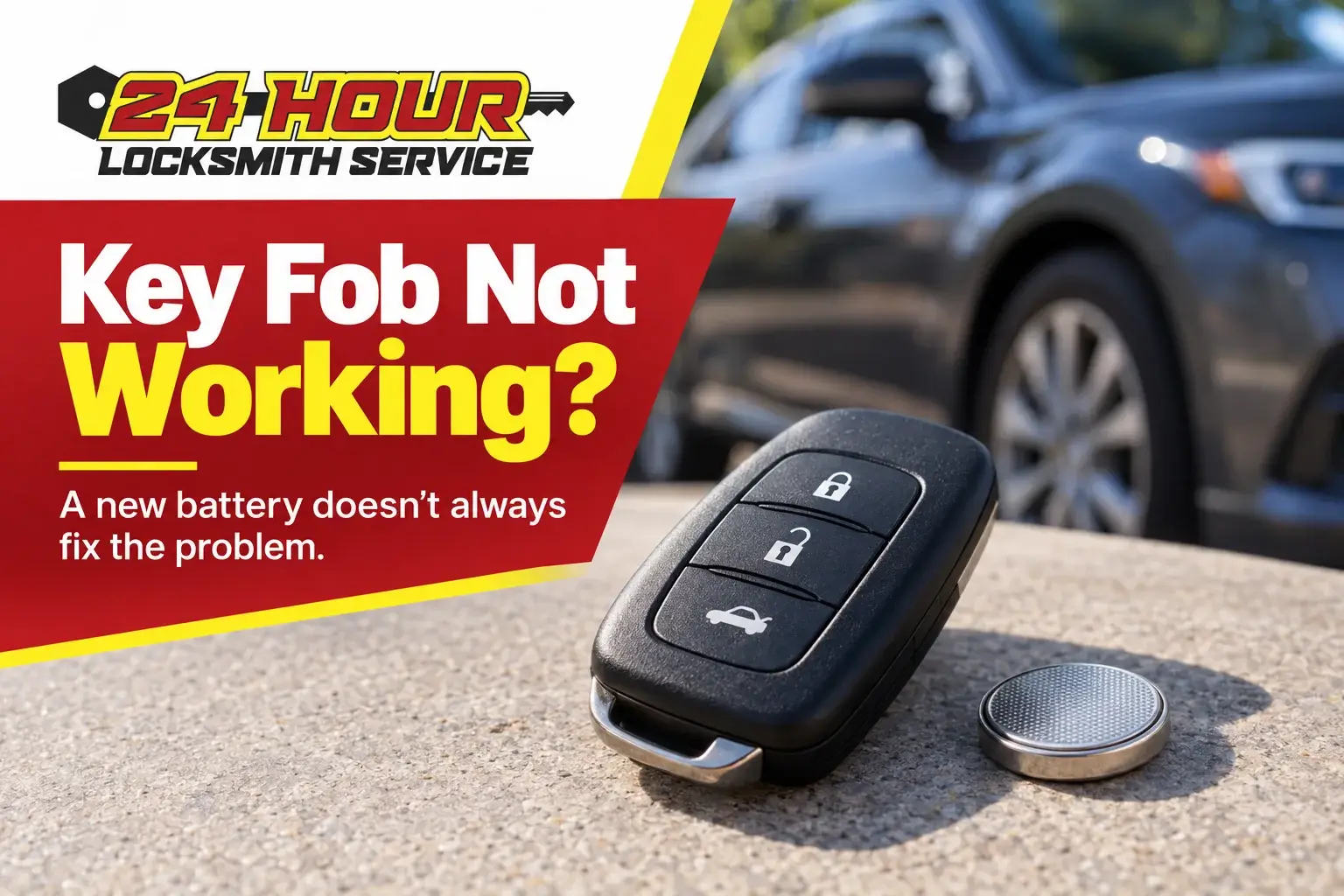
A key fob not working after a battery change may have the wrong coin cell, a reversed battery, or poor battery contact. If those checks don't solve it, the fob may need pairing, repair, or replacement, or the car may need diagnosis. Start with the battery installation, then use the symptoms and a spare fob to narrow the next step.
Check the new battery before changing anything else
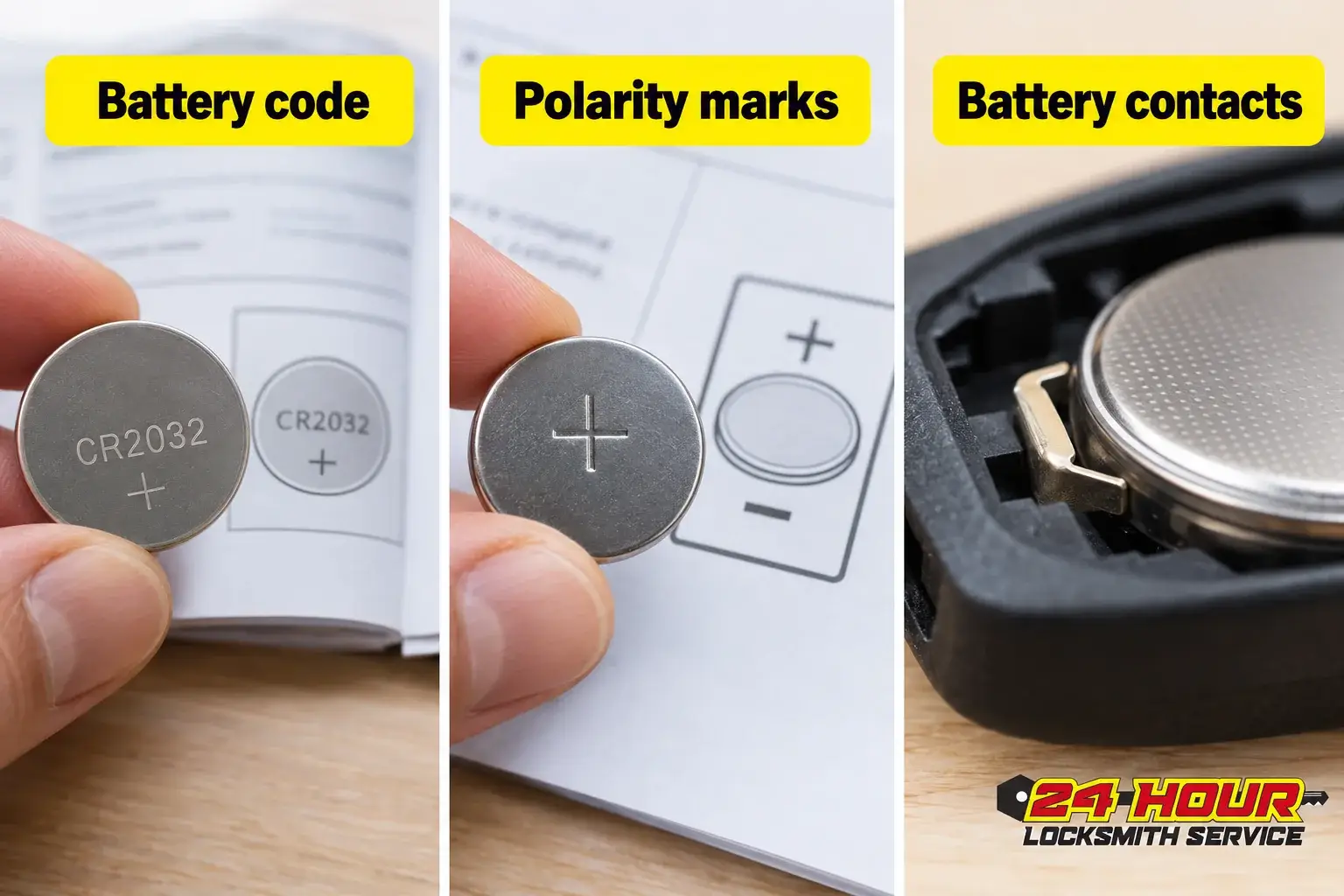
A battery that fits inside the case isn't enough. Its code, direction, and contact with the holder all matter. Follow the opening and battery instructions for your exact fob.
- Match the battery code. Use the number listed in the owner's manual or the fob's instructions. Don't rely only on how the battery looks. AAA's battery replacement advice lists several common types, including CR2032, CR2025, and CR2016. They aren't a universal shopping list for every fob.
- Check the battery direction. Match the plus and minus direction shown in the holder or instructions. Don't assume that the side facing up in another person's fob is correct for yours. Note the marks before lifting the battery again.
- Look at the fit and contacts. Check for a loose cell, visible dirt, or a contact that doesn't meet the battery. Don't bend tabs, scrape the circuit board, or force the case shut. If a part looks damaged or won't sit correctly, stop rather than pressing harder.
Close the case as directed, then test the remote. If it still fails, move to the checks below rather than repeatedly opening the case.
Use the car's response to narrow the problem
“The fob doesn't work” can describe several failures. Separate what happens at the doors from what happens when you try to start the car.
Try a spare fob separately
If you have a spare, test the same door buttons from the same position. Test each fob separately so you know which remote the car is responding to. Note whether the spare can also start the car.
A working spare points toward a problem limited to the first fob, but it doesn't prove that pairing is the answer. If both fail, the car's receiver remains a possibility. Don't buy two replacement fobs based on that result alone.
Separate door-button trouble from starting trouble
A remote that won't unlock the doors presents a different symptom from a car that unlocks but displays “No key detected.” Don't treat both as proof that the new battery failed.
With the car safely parked, note which functions still work and the exact message on the dashboard. A starting failure alone doesn't identify the cause. If you need an approved backup entry or starting method, use the owner's manual for your exact vehicle rather than a procedure meant for another model.
Look for clues from a drop or water exposure
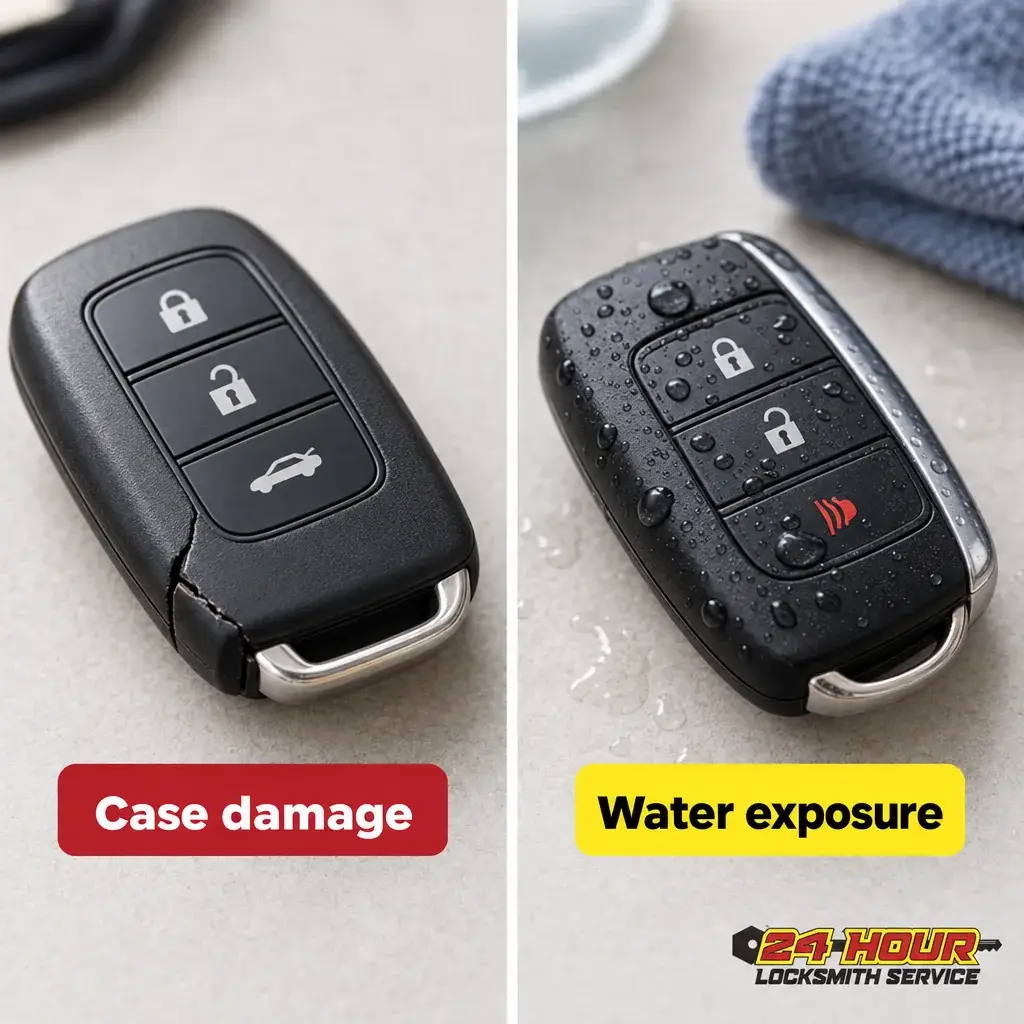
Think back to when the trouble began. A hard drop, a cracked case, or water exposure gives the next person checking the fob useful context.
AAA's guide to key fob problems lists water damage and damaged parts that send or receive the signal among possible causes. A battery change won't repair those faults.
A cracked shell doesn't prove the electronics have failed. Likewise, a case that looks fine doesn't rule out damage inside. Treat the fob's history as a clue, not a reason to order a replacement without checking further.
Key fob not working after the battery checks?
Pairing links the fob with the car so they can recognize each other. Lost pairing is a possible cause of failure, but trouble right after a battery change doesn't prove that the change erased the connection.
Re-pairing can usually be handled by a locksmith or dealer. If pairing is needed, transponder and key fob programming is the relevant service. It isn't a substitute for repairing damaged electronics.
The next decision is whether the existing fob can be paired, needs repair or replacement, or whether the car needs further checking. That distinction matters before you spend money on another remote. A problem with the car's receiver won't be settled simply by fitting another coin cell.
Arrange the right help where the car is parked
Before arranging a tow from a Houston parking lot, workplace, or driveway, find out whether mobile help suits the problem. 24 Hour Locksmith Service offers mobile transponder and key fob programming in Houston. Availability for your exact vehicle needs to be checked before service is promised.
Have these details ready when arranging help. They make it easier to explain the failure without guessing at its cause.
-
The car's make, model, year, and VIN.
-
Proof of ownership. The company's programming page says customers typically need this and the VIN.
-
All available keys and fobs, including a spare that still works.
-
The battery number you installed and whether the problem started before or after the change.
-
Which buttons work, whether the car starts, any dashboard message, and any known drop or water exposure.
-
The car's location and whether you can get inside it.
Other questions drivers ask
Call 24 Hour Locksmith Service at (832) 979-7899 to discuss mobile key fob programming in Houston and check service availability for your vehicle.