Panic hardware and standard locks both secure a door, but they do not work the same in an emergency. Codes often require panic hardware, also called an exit device or push bar, on certain business doors where many people may need to leave fast. A key lock can slow people down. A push bar lets anyone exit with one simple push, even if they are stressed, carrying items, or in low light.

What “panic hardware” means in plain words
Panic hardware is a door latch system with a wide bar across the inside of the door. Push the bar, the door unlatches. No key. No twisting. No tiny thumbturn.
You may hear a few names:
- Panic hardware
- Exit device
- Push bar
- Crash bar (many people say this)
The main goal is safe exit. Security comes second, and the hardware is built to handle both.
What a “standard lock” means in plain words
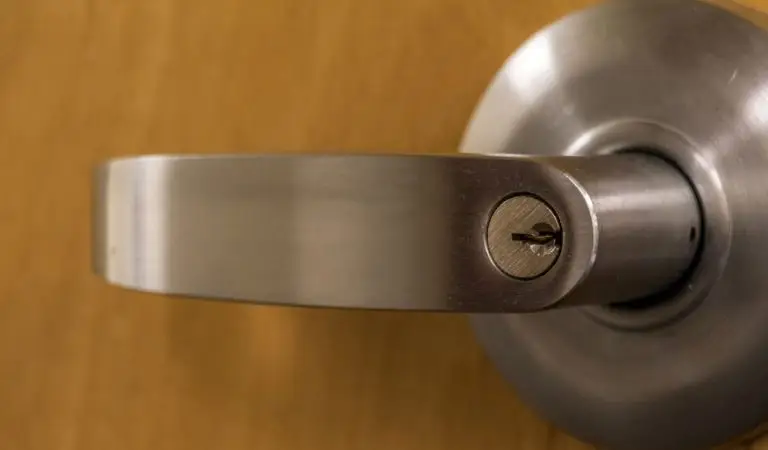
A standard lock is what most people picture.
- Deadbolt
- Knob lock or lever lock
- Mortise lock (common on older commercial doors)
- Keyed cylinder with a latch
These locks can work great for security. They can also be a problem on exit doors when lots of people may need to leave at once.
When codes tend to require panic hardware on business doors
Codes are not “one rule for every door.” They focus on risk. More people, higher risk. Some uses also raise risk.
Many business settings must use panic hardware on certain egress doors, meaning doors used for exiting. This often depends on:
- Occupant load, the number of people the space holds
- The type of business use
- Whether the door is part of a required exit route
- Whether the door is a fire-rated door in a rated opening
If your space can hold a crowd, the bar is often required. If your space is smaller, a standard lock might be allowed.
A simple way to picture it is this: if your building can fill up like a movie theater line on a Friday night, codes tend to demand faster exiting than a key lock can give.
Places where panic hardware shows up a lot
- Restaurants and bars
- Event spaces and banquet rooms
- Schools and daycares
- Churches and assembly spaces
- Larger retail spaces
- Some warehouse and industrial exits
If you are unsure, do not guess. A wrong lock on the wrong door can fail inspection, cause liability trouble, or block safe exit.
For service options on business doors, see Commercial locksmith and Emergency locksmith. Building code references may also be reviewed through trusted sources such as https://en.wikipedia.org/wiki/International_Building_Code.
The key code idea, free egress in one motion
A common code theme is “free egress.” That means you can leave without special knowledge. No key. No tool. No secret move.
Panic hardware supports that by making exit a single action. Push the bar, door opens.
Standard locks can still allow free egress if set up right, like a lever that always opens from inside. Trouble starts when someone adds a double-cylinder deadbolt or a weird add-on that makes exit take extra steps.
Panic hardware vs standard locks, quick comparison
| Feature | Panic hardware (exit device) | Standard lock |
|---|---|---|
| How you exit | Push bar | Turn lever, thumbturn, or sometimes key |
| Best for | Required exit doors, higher occupant load | Offices, low occupant load areas, interior doors |
| Code focus | Fast exit for groups | Security and everyday use |
| Common fail point | Misalignment and door sag | Wrong lock type on an exit door |
| Traffic handling | Built for heavy use | Varies by grade and type |
Common door types where exit devices are used
Many Houston businesses use:
- Aluminum storefront doors, think strip center entries
- Hollow metal doors, common in warehouses and back exits
- Fire-rated steel doors in corridors and stairwells
Exit devices can be fitted to these, but the parts and prep must match the door and frame. A mismatched setup leads to rubbing, latch issues, and that classic “slam it harder” habit. Doors should not need a shoulder check.
For related door hardware help, see Commercial lock repair and Commercial lock installation.
Fire-rated doors and why hardware choices get stricter
Fire-rated doors are part of a fire barrier. The door, frame, hinges, closer, and latch all work as a set.
On many fire-rated openings, you need:
- A self-closing device, usually a door closer
- Positive latching, meaning it latches every time
- Hardware that is listed for that door
If someone installs the wrong lock or drills extra holes, you can lose the rating. That can create inspection problems and safety problems. If a door is labeled, treat it like a “do not mess with” sign unless you know the rules.
For additional safety guidance references, see https://www.nfpa.org/.
Real talk, common mistakes business owners make
People are busy. Doors seem simple. That combo causes mistakes.
Mistake 1, adding a deadbolt to “help security” on an exit door
A double-cylinder deadbolt needs a key to exit. That can trap people. Many codes do not allow it on required egress doors.
Mistake 2, using a keypad or maglock without proper exit release
Access control is great, but it must release for safe exit. If the power fails, or the system glitches, people still must get out.
For systems that may be part of a controlled entry setup, see Commercial access control systems and Commercial keyless entry systems.
Mistake 3, mismatching the device to the door
Storefront aluminum doors need the right style and mounting method. Using the wrong unit can cause flex, loose screws, and latch failure.
Mistake 4, poor alignment and “it sort of latches”
A latch that only catches if you yank the door is not doing its job. This can be caused by sagging hinges, worn closers, or a shifted strike.
Mistake 5, ignoring the door closer
The closer is the bouncer. It makes the door shut and latch. If the closer is weak or leaking, the latch may not engage, and the door may sit open.
A short story you may recognize
Owner: “The back door sticks, so we put a deadbolt on it.”
Employee: “Sometimes the key is missing.”
Owner: “It’s fine, we keep one in the office.”
Me: “So in a rush, people run to the office first?”
Owner: “Well, when you say it like that…”
This is how good intentions turn into bad exit paths.
What we usually see in Houston, TX
Houston buildings get a workout. Between foot traffic, delivery carts, and weather, doors drift out of alignment.
Common patterns we run into:
- Storefront doors along Westheimer or near strip centers where the latch hits the frame after the door sags
- Back exit doors on warehouses near I-10 service roads where the closer is worn and the door slams or will not latch
- Humidity-swollen wood doors in older properties that start rubbing, then the panic bar feels “stiff”
Houston weather, heat and humidity change how doors behave
Heat and humidity can make materials move.
- Wood can swell and bind, so the door rubs the frame.
- Metal expands too, and small changes can throw off a tight latch.
- Heavy rain and wind can stress closers and frames, especially on doors that get propped open.
Quick maintenance matters more here than people think. A door that worked in March can act cranky in August. Like a truck that starts fine in cool weather, then struggles in the summer.
Safety notes without the scare tactics
- Never block an exit door with furniture, storage, or a trash can. It happens. It is also a bad idea.
- Do not add extra locks to an exit door without checking code and use. Extra security is not worth trapped people.
- If a panic bar takes real force to push, treat it as a problem, not “normal.”
Troubleshooting steps you can try first
Use these quick checks before you call, and stop if you see a damaged fire door label or major door damage.
- If the door will not latch unless you pull hard, then check the closer, then check hinge sag, then check strike alignment.
- If the bar feels stiff or grinds, then look for rubbing on the latch side, then check if the door is rubbing the frame.
- If the latch hits the frame, then check if the strike plate is loose, then check if the frame has shifted.
- If the door slams, then the closer may need adjustment, or it may be failing.
- If the door will not close all the way, then check for weatherstrip bunching, loose threshold parts, or debris in the frame.
- If the device works, but the outside trim is loose, then stop using the door hard and get the fasteners tightened before parts strip out.
- If you see wires, magnets, or a keypad tied to the door, then test exit during a power-off condition. If you are not sure, call a pro.
If you need hands-on help with commercial door hardware, start with Commercial locksmith or Contact Us.
Myths and facts people repeat at the shop door
Myth: A deadbolt always makes an exit door safer.
Fact: On many exit doors, a deadbolt can slow or stop exit. Safety often means faster exit, not a stronger lock.
Myth: If the door is locked from outside, it cannot have panic hardware.
Fact: Many exit devices allow free exit from inside while staying locked from outside.
Myth: Any push bar is the same.
Fact: Grade, door type, and fire rating matter. The wrong unit can fail early or fail inspection.
Myth: If it closes, it is fine.
Fact: It must close and latch every time, with normal force.
Picking the right setup, what to think about
You can make smarter choices if you ask a few simple questions.
1) How many people can be inside?
Higher occupant load often brings stricter egress rules. This is a big driver for panic hardware.
2) Is the door part of the required exit route?
Some doors are just convenience doors. Some are required exits. The required ones get the strict rules.
3) Is the opening fire-rated?
If yes, you want listed hardware, correct latching, and a closer that works right.
4) What is the outside entry plan?
Many businesses want the door locked from outside, but free to exit from inside. Exit devices support this with the right trim and cylinder options.
5) Does the door see heavy traffic?
A busy back door that gets hit by carts needs hardware that can take that beating.
Access control and panic hardware, friends when done right
Many Houston businesses want keypads, badges, or remote release. You can often pair these systems with exit devices.
The key is that exit must stay simple. People should not need a code to leave. If you add electrified parts, you must plan for:
- Fire alarm tie-ins where required
- Power loss behavior
- Manual exit that still works
If your system acts “moody” when the weather shifts, that is a clue to check wiring, alignment, and the door closer.
Care schedule for exit devices and commercial locks
A little care saves a lot of headaches.
Weekly
- Open and close the door 5 times, watch if it latches each time.
- Push the bar, confirm it moves smoothly and returns.
- Listen for scraping or a new slam.
Monthly
- Check screws on the bar, trim, and strike, snug but not over-tight.
- Look at hinges for sag or loose screws.
- Check the closer, look for leaking fluid and smooth closing.
Yearly
- Have a locksmith inspect alignment, latch engagement, and hardware wear.
- Confirm the door still meets your use needs, especially if your tenant space changed.
- If you have access control, test exit during a power-off condition with your team.
Questions inspectors and property managers often ask
If you can answer these, you are ahead of the pack.
- Does every required exit door open from inside without a key?
- Does the door close and latch by itself if it is fire-rated?
- Are there any extra locks, slide bolts, or chains on exit doors?
- Is the panic hardware listed for the door type and rating?
- Is the opening clear, with no stored items in the path?
FAQs
What is panic hardware on a door?
It is a push bar system that unlatches the door when you push it. It is made to let people exit fast.
When do business doors need panic bars?
Often when the door is part of a required exit path and the space has a higher occupant load, or the use type calls for it. The exact trigger depends on the building and use.
Can my exit door be locked from the outside but still safe from the inside?
Yes. Many setups keep the outside locked while the inside always opens with the bar or lever.
Is a double-cylinder deadbolt allowed on an exit door?
In many cases, no, because it can require a key to exit. Rules depend on the door’s role in egress and local code calls.
Why does my panic bar stick in humid weather?
Humidity and heat can shift doors and frames, and small alignment changes can make the latch bind. Loose hinges and weak closers make it worse.
What is the difference between a fire exit door and a regular exit door?
A fire-rated door is part of a fire barrier. It usually needs self-closing and positive latching, plus listed hardware.
Can I install panic hardware on a storefront aluminum door?
Often yes, but the device type and mounting must match the door style. Storefront doors need the right prep to stay solid and aligned.
Who should I call if my exit device fails or my door will not latch?
A commercial locksmith can inspect the door, closer, hinges, strike, and hardware, then repair or replace parts to restore safe use.
If your business in Houston needs help choosing, fixing, or upgrading panic hardware or standard locks on exit doors, call 24 Hour Locksmith Service at (832) 979-7899 or visit https://24hourlocksmith.day, we can help your doors pass inspection, close and latch right, and keep staff and customers moving out safely when it counts. You can also reach out through Contact Us.