Your front door lock sticks because weather moves parts more than you think. Heat makes wood swell and metal grow a bit. Cold makes grease thicken and metal pull tight. Humidity swells frames and feeds rust. Add worn keys, dust, or a shifted strike plate, and the key feels stuck. The good news is simple. Clean, lube, and line things up. If that fails, call a pro before the key snaps.
Why locks misbehave when the weather swings
Your door and lock are like neighbors. They live close. When one swells or shrinks, the other feels it. Small changes mean tight fits. Tight fits mean sticky turns. Houston weather keeps them on a roller coaster. Hot sun, Gulf moisture, then a blue norther. Your lock sighs and sticks.

Heat and summer sun problems
- Wood swells. A wood door or frame pulls tight against the latch and deadbolt. The bolt drags.
- Metal expands. The door edges grow a hair. The strike opening seems smaller.
- Old grease goes gummy. Dust bakes in, and pins inside the cylinder move slower.
What you feel
- The key goes in, but the turn feels stiff.
- The deadbolt throws halfway, then stops like it hit a wall.
- The knob or thumb turn needs both hands on a hot afternoon.
Quick summer fixes
- Shade the door and let it cool a bit before work.
- Clean the keyway with short blasts of dry air. A camera blower bulb works.
- Lube the keyway with a dry Teflon or graphite product. Avoid heavy oil.
- Check hinge screws. Tighten them so the door stops sagging.
- Loosen the strike plate screws a touch. Nudge the plate a hair toward the drag side. Tighten.
Cold snaps and winter issues
Texas cold still bites. When it does, locks act fussy.
What cold does
- Metal parts shrink. Pin stacks in the cylinder bind.
- Grease thickens. The plug, cam, and bolt drag.
- Condensation freezes. Moist air makes frost inside if the lock got wet.
What you feel
- The key goes in hard. It will not seat all the way.
- The turn starts, then crunches to a stop.
- The thumb turn feels gritty.
Quick cold fixes
- Warm the key in your hand. Do not heat with flame, that can damage parts.
- Use a lock de-icer. If you do not have one, a small bit of rubbing alcohol on the key helps. Let it dry, then lube.
- Switch to a dry lube. Oils in cold weather can gum up.
Humidity, rain, and Gulf air
Houston humidity is a prankster. It swells wood, feeds surface rust, and brings grit with storms.
What moisture does
- Door frames puff up. The latch does not line up with the strike.
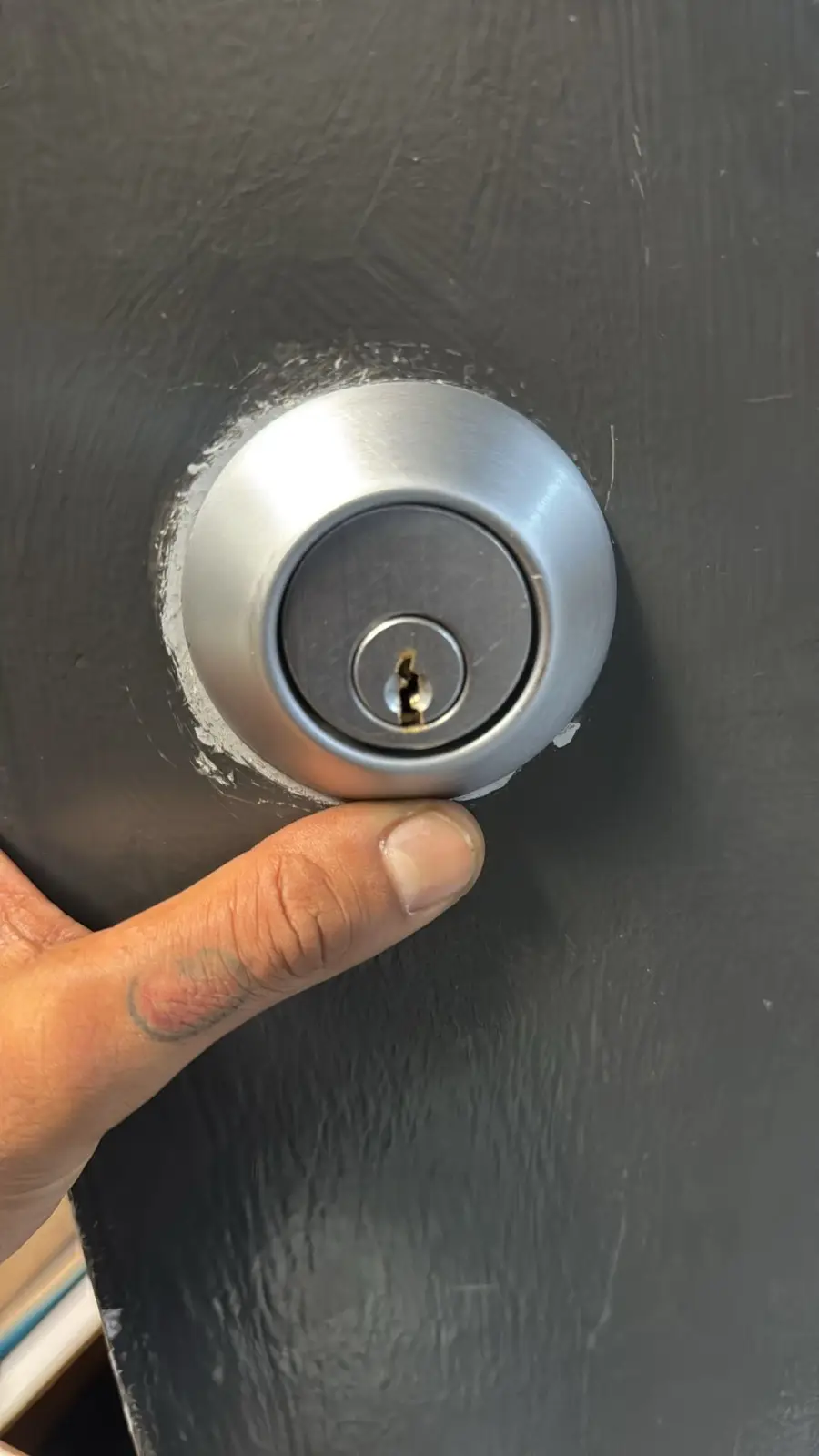
- Rust blooms on the bolt and inside the keyway. Things grind.
- Dirt rides in on wind and rain. That grit packs in like beach sand.
What you feel
- The door needs a hip check just to latch.
- The key is fine in the morning, then sticks after a storm.
- The deadbolt retracts slow, like it is tired.
Quick wet weather fixes
- Dry the keyway gently with air. Do not soak it.
- Clean with a non-oily lock cleaner. Then apply a dry lube.
- Wipe the bolt and latch face. A little surface rust can scrape off with a nylon pad.
- Check weatherstripping. If it pushes the door hard, the lock strains.
A quick story you might know
My neighbor Joe in Spring Branch said, “My deadbolt hates August.” His west-facing door cooked every afternoon. He kept wrestling the key. We tightened the top hinge, bumped the strike plate 1 millimeter, and added dry lube. Ten minutes. He said, “That was it? I thought I needed a new door.” Not this time.
Parts that tend to bind
- Key and cylinder. Worn keys do not match pins well. Pins then snag.
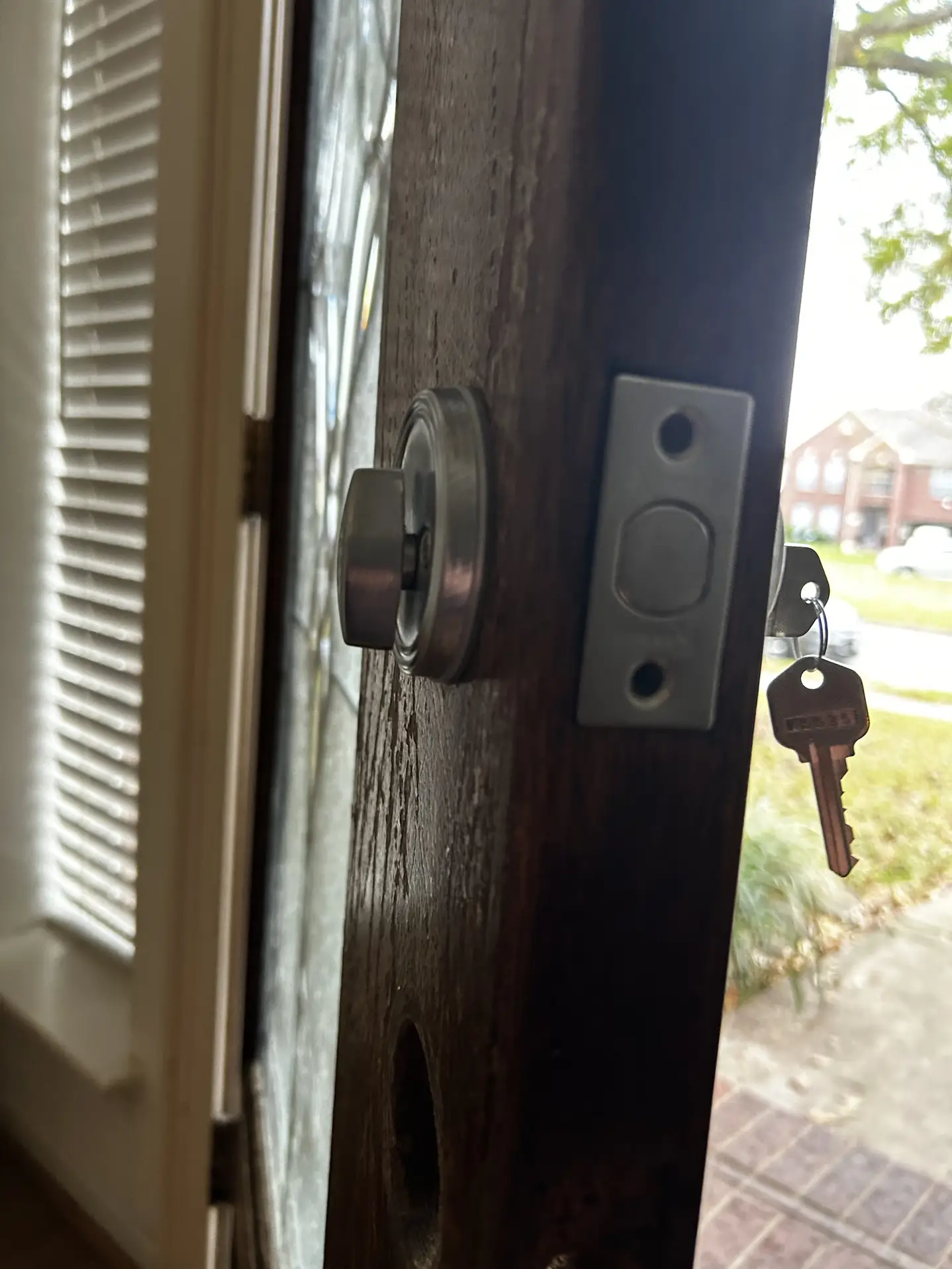
- Deadbolt throw. The square bolt can rub on the strike mouth.
- Latch tongue. The spring latch can hang on a tight strike plate.
- Strike plate. If it sits a hair low or high, the bolt hits steel, not air.
- Hinges. Loose screws let the door sag and twist.
Check these before you start
- Look at the gap around the door. It should be even. If the top latch side touches the frame, tighten the top hinge screws.
- Inspect the strike plate. Mark where the bolt rubs with lipstick or a dry erase marker. Close, open, and look for the smear.
- Try a spare key. If the spare works better, your daily key is worn.
- Test with the door open. If the lock turns smooth when open, the lock is fine. The door alignment is the problem.
What we usually see in Houston, TX
Most sticky locks happen after a soaking storm on Westheimer or a hot run on I-10 where doors bake in afternoon sun. We see swelled frames in Meyerland after big rains, and grit inside keyways near job sites around the Heights. Short fixes and small moves solve most of these.
Simple fixes you can try today
- Clean first. Blow out dust. Wipe the bolt. Dirt is sticky enemy number one.
- Use the right lube. Dry Teflon, dry silicone, or graphite for the cylinder. Light dry spray on the latch and bolt. Skip heavy oils that turn gummy.
- Tighten hardware. Snug hinge screws with a hand driver. Replace stripped screws with longer ones so they grab the stud.
- Adjust the strike. Loosen screws. Tap the plate in the direction that gives the bolt a clear path. Tighten and test.
- File, but only a little. If the bolt still grazes, a few light file strokes on the strike mouth can help. Go slow.
- Refresh the key. If the key looks shark-toothed or bent, cut a new one from the original code if you have it. If not, copy from a less worn spare.
Safety notes to keep you and your door happy
- Do not force the key. Keys snap when twisted hard. A broken tip in the plug turns a small job into a big one.
- Skip open flames and heat guns near the lock. Paint, wood, and seals can scorch.
- Avoid overspray on painted doors. Mask the area or spray the key and insert it.
- Do not oversize the strike opening too much. You want latch security, not a loose fit.
Why the key matters more than you think
Locks match your key by tiny steps, called bitting. If the peaks wear down, pins do not line up. You feel grind and stops. A fresh key from the code fixes many sticky turns. If the cylinder still binds with a fresh key, the pins or springs may be worn.
Season by season causes and fixes
Spring
- Pollen and dust move in. Clean, then lube. Check weatherstripping after winter shifts.
Summer
- Heat and sun swell wood and soften old grease. Shade, lube dry, and tweak the strike position.
Fall
- Wind brings grit. Blow out the keyway. Tighten the hinge screws before cool nights settle the frame.
Winter
- Cold thickens oil and shrinks metal. Use dry lube. Warm the lock gently by hand. Keep de-icer on hand for rare freezes.
Troubleshooting steps that point you to the fix
- If the lock turns smooth with the door open, then align the door or adjust the strike plate.
- If the key sticks half way in, then clean the keyway and try a fresh key.
- If the deadbolt stops near full throw, then move the strike plate a hair toward the door stop.
- If the knob turns but the latch will not retract, then lube the latch tongue and check for a loose spindle or set screw.
- If the lock feels gritty after rain, then dry, clean, and apply a dry lube. Check for light surface rust.
- If the key turns but the bolt will not move, then the cam or tailpiece may be loose or broken. Call a locksmith.
- If every key is hard but the spare works better, then replace worn keys before they damage the cylinder.
Common myths and facts
- Myth: Spray any oil and it will fix it. Fact: Heavy oil traps dust. Dry lube keeps pins moving without sludge.
- Myth: A sticky lock means the lock is bad. Fact: Most sticky locks are door alignment issues, not failed hardware.
- Myth: Graphite is always best. Fact: Graphite works well, but some modern cylinders prefer dry PTFE sprays. Avoid wet oils.
- Myth: Filing the key makes it smoother. Fact: Filing changes cuts and causes pin bind. Use a proper new key.
When the strike plate needs more than a nudge
Sometimes the bolt hits low because the door sagged. Tighten hinge screws first. If that fails, you can mortise the strike deeper on one side. Mark the needed shift, remove the plate, and shave a thin layer of wood with a sharp chisel. Test often. Go slow. You want a clean fit.
When the cylinder is the culprit
If the key chirps, grinds, or must wiggle to turn, the pins could be worn or gunked. Clean and lube first. If it still binds, the plug or pins may need rekeying or replacement. Rekeying gives you fresh pins that match a fresh key. This keeps your hardware but resets the inside.
Deadbolts vs spring latches
- Deadbolts use a square bolt that needs perfect aim. A tiny misalignment stops it cold.
- Spring latches have some give, but they also hate tight strikes and gummy grease.
Treat deadbolts to careful strike work. Treat latches to clean, lube, and hinge checks.
Apartment and commercial doors in Houston
Metal frames along Westheimer or in Downtown high rises shift less than old wood frames, yet screws and closers still drift. Heavy use, grit, and cleaning products dry out parts. If your office door locks late at night, a small closer tweak and strike move can save a lot of end of day fights.
Care schedule that keeps locks smooth
Weekly
- Wipe the bolt face and latch tongue.
- Check that the door latches without a push from your hip.
Monthly
- Blow out the keyway with dry air.
- Add a tiny bit of dry lube to the keyway and latch. Work the key and thumb turn 10 times.
- Check hinge screws. Snug any that moved.
Yearly
- Inspect weatherstripping. Replace if it shoves the door hard.
- Check the strike plate for wear. Make small alignment tweaks.
- Make fresh keys from good copies. Retire worn ones.
- If the lock has seen many storms, have it rekeyed or serviced.
Houston weather tie-ins you can plan for
- Summer heat on west-facing entries makes wood swell by afternoon. Do checks in the evening when it cools, then set the strike.
- Gulf rain in May and June swells frames. Leave a tiny clearance when you adjust, so you have room for a storm swell.
- Quick cold snaps can freeze damp locks. Keep a small de-icer in a junk drawer. Dry lube after you thaw it.
When to call for help
- The key bent or feels close to snapping.
- The lock only works with the door open, and strike moves did not help.
- You see metal shavings in the keyway. That points to internal wear.
- The thumb turn spins but the bolt does not move. A part inside broke.
- You moved the strike as far as you safely can and it still drags.
A locksmith can rekey, reset hardware, and spot frame twist from hinge issues. That keeps your door secure and smooth.
Quick do and do not list
Do
- Try a spare key.
- Clean before you lube.
- Tighten hinges from top to bottom.
- Test with the door open to split lock issues from door issues.
Do not
- Force the key or thumb turn.
- Soak the cylinder with heavy oil.
- Grind out the strike slot too wide.
- Ignore a sticking lock. It will get worse, not better.
A few tool tips without a full toolbox
- Hand screwdriver, not a drill. You feel snug, not strip.
- Small flat file. Use light passes only.
- Dry lube spray with a straw. One short puff goes far.
- Blue tape to mask paint before you spray.
- A carpenter pencil or lipstick to mark bolt rub points.
Why small moves beat big swings
Locks are precise. A move as small as a fingernail can change the feel from stuck to smooth. When you adjust, make tiny changes, then test. This keeps your door pretty and your lock happy.
Wood door care in humidity
Old bungalows in the Heights often have solid wood doors. Seal the top and bottom edges. Unsealed end grain drinks moisture and swells. A quick sanding and seal coat can stop future stick. Check paint chips and touch up before storm season.
Metal door and frame notes
Metal expands too, but it stays truer. If a metal frame binds, look at hinges first. A bent hinge pin or loose screws can shift the door just enough to rub. Replace worn pins in pairs so the door hangs straight.
Dealing with paint and weatherstripping
Thick paint builds up in the strike opening. Scrape off globs that touch the bolt. Soft weatherstripping is good, but if it crushes hard, it can push the door off center. Pick a profile that seals without shoving.
Key habits that keep locks young
- Keep keys clean. Pocket lint turns into lock dust.
- Do not hang a heavy keychain from the key while it is in the lock. Weight wears the plug.
- If a new key does not work well, ask for a fresh cut, not a copy of a worn key.
FAQs
Q: Why does my front door lock stick only in the afternoon?
A: Sun heat can swell the door and frame by afternoon. Try a small strike plate move, add dry lube, and tighten hinge screws.
Q: My key works when the door is open, but not when closed. What should I fix?
A: The lock is fine. Adjust the strike plate and check hinge sag. Move the strike a tiny bit toward the side where the bolt rubs.
Q: Is WD-40 okay for locks?
A: It can free stuck parts short term, but it leaves a film that grabs dust. Use a dry Teflon or graphite lube for lasting smooth turns.
Q: How can I stop rust in a humid area like Houston?
A: Keep the keyway dry, use a dry lube, wipe the bolt face, and touch up paint or clear coat on exposed metal parts. Fix leaks above the door.
Q: My key is worn. Should I copy it?
A: A copy of a worn key repeats the wear. Ask for a new key cut from code or from a better original. That often fixes sticky pins.
Q: The deadbolt hits the strike and will not fully extend. Can I just file the bolt?
A: File the strike, not the bolt. The strike is cheap and easy to shape. Move it first. Then make tiny file passes if needed.
Q: Is graphite safe for smart locks?
A: Many smart locks use similar cylinders, so dry lube is fine for the keyway. Keep lube away from electronic parts and batteries.
Q: How often should I lube my locks in Houston?
A: Monthly light lube in peak summer and after big rains, then quarterly the rest of the year. Quick and light is best.
Q: When is rekeying better than replacing?
A: If the lock body is solid but the key feel is rough, rekeying with fresh pins and fresh keys restores smooth action without new hardware.
Q: Can tight weatherstripping cause a sticky lock?
A: Yes. If the seal makes the door spring back, the bolt may not line up. Trim or replace the seal so the door sits calm when closed.
Final check steps before you call a pro
- Test with the door open and closed. Note the difference.
- Try a known good key. Mark where the bolt rubs.
- Tighten all hinge and strike screws.
- Clean and dry lube the keyway and latch.
If those steps do not restore a smooth turn, you likely have worn pins, a bent tailpiece, a warped door, or a frame issue that needs tools and parts you may not have.
Need the lock to turn like butter again, day or night? 24 Hour Locksmith Service can clean, rekey, adjust strikes, and fix sticky deadbolts across Houston fast, from the Heights to Meyerland. Call (832) 979-7899 or visit https://24hourlocksmith.day for friendly help that keeps your door secure and easy to use.